
The debt fix that can cost you a house
For someone buying in the next few years, debt settlement is the "debt help" option that can do the most damage. How it works and where to look instead.
Why can debt settlement cost someone a house?
The ads are on Facebook, Instagram and late-night TV. They promise to negotiate with creditors and reduce debt, and they sound like a lifeline for anyone struggling with credit card balances. For someone hoping to buy a home in the next few years, debt settlement is the "debt help" option that can do the most damage to credit, and it can push a move-in date out by years.
How is debt settlement different from consolidation and disputing errors?
Three kinds of "debt help" sound alike and are not:
- Disputing credit report errors. This goes after items on a credit report that are reported incorrectly. What creditors report is supposed to be accurate, complete and verifiable, and consumers can dispute items that are not. It cleans up bad reporting without touching the good accounts.
- Debt consolidation. This rolls several debts into one loan, ideally at a lower rate. The full amount is still paid, just as one payment instead of five.
- Debt settlement. This tries to get creditors to accept less than the full balance. It is also the one that can do the most harm to credit and to the chances of a mortgage.
| Kind of debt help | What it does | Effect on credit | When it may fit |
|---|---|---|---|
| Disputing credit report errors | Goes after items reported incorrectly | Cleans up bad reporting without touching the good accounts | For items on the report that are genuinely inaccurate |
| Debt consolidation | Rolls several debts into one loan, ideally at a lower rate | Keeps accounts current | For those who can still get it |
| Debt settlement | Tries to get creditors to accept less than the full balance | Can do the most harm to credit and to the chances of a mortgage | Only after talking to a qualified professional |
How does the debt settlement playbook work?
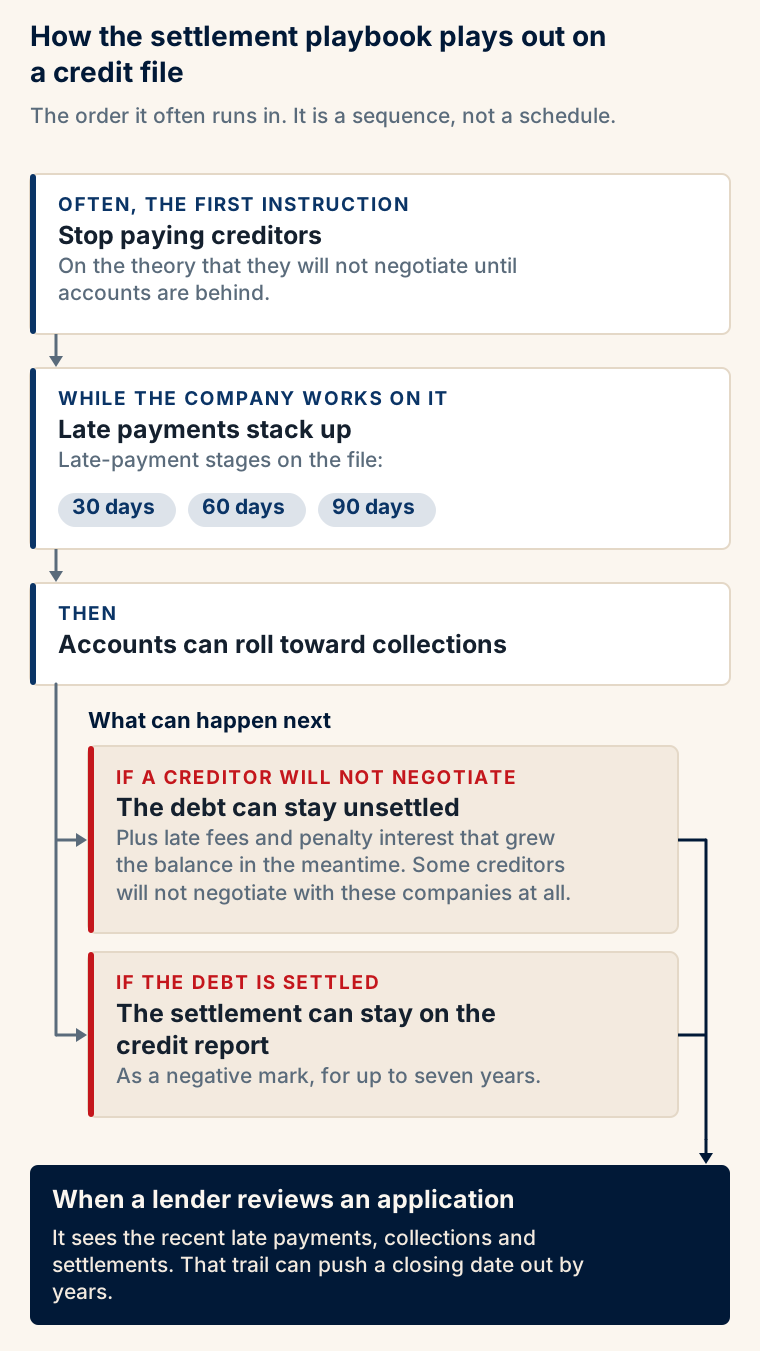
Often, the first instruction after enrolling is to stop paying creditors, on the theory that they will not negotiate until accounts are behind. Late payments stack up at 30, 60 and 90 days while the settlement company works on it, and accounts can roll toward collections.
What the ads leave out: some creditors will not negotiate with these companies at all. A person can follow every instruction, damage their credit on schedule, and still end up with the debt unsettled, plus late fees and penalty interest that grew the balance in the meantime.
The Consumer Financial Protection Bureau, the federal agency that oversees this area, warns that debt settlement can damage credit, can lead to lawsuits from creditors, and may leave people deeper in debt than when they started. The fees are not small either: these programs typically keep a large share of the enrolled debt as their fee. Debt settlement is also on the list of five homebuying mistakes that can cost a home.
Why does it hit future homeowners hardest?
Even after a debt is settled, the settlement can stay on a credit report as a negative mark for up to seven years, which also makes the file harder to clean up later. When a lender reviews an application, it sees the recent late payments, collections and settlements. That trail can push a closing date out by years.
Where can someone look instead?
Each of the options below depends on the specific situation. The real first step is to talk to a qualified professional, such as a credit counselor, a financial advisor or a bankruptcy attorney, before signing up for anything that promises to settle debts.
- A nonprofit credit counselor, ideally one accredited by the National Foundation for Credit Counseling (NFCC). They can often set up a debt management plan that is much easier on credit than settlement.
- Consolidation, for those who can still get it, because it keeps accounts current.
- Disputing errors, for items on the report that are genuinely inaccurate.
- A bankruptcy attorney, when the debt is truly overwhelming. This is not legal advice, but it helps to know the options: Chapter 7 can discharge eligible unsecured debt, including credit cards, in about three to four months, and many people become eligible for an FHA loan roughly two years after discharge. For some, that can be a faster road than years of settlement damage.
And the honest part
This is general education, not legal, credit or financial advice and not a commitment to lend. Bankruptcy timelines, credit reporting periods and loan waiting periods vary by situation and loan program and can change. Talk to a qualified attorney, credit counselor or licensed mortgage professional about your own situation.
Which programs are worth a look while sorting out debt?
The two-minute quiz narrows the list to the options worth a closer look for someone in this position.