
Why a house payment can jump in year two
Same loan, same rate, and a bigger bill. Why a Texas house payment can jump in year two, what the January 1 valuation has to do with it, and how to spot it.
Why would a house payment go up when the loan has not changed?
Same loan, same rate, and a bigger bill. In Texas, a house payment can rise by hundreds of dollars a month in year two, and it usually comes down to what was sitting on the lot on one date.
It plays out like this. A buyer closes on a brand-new home, the payment fits the budget, and the first year goes fine. Then a letter arrives from the lender: the payment is going up. Nothing the buyer did caused it, and in many cases it could have been spotted before signing.
How does the January 1 valuation change the payment?
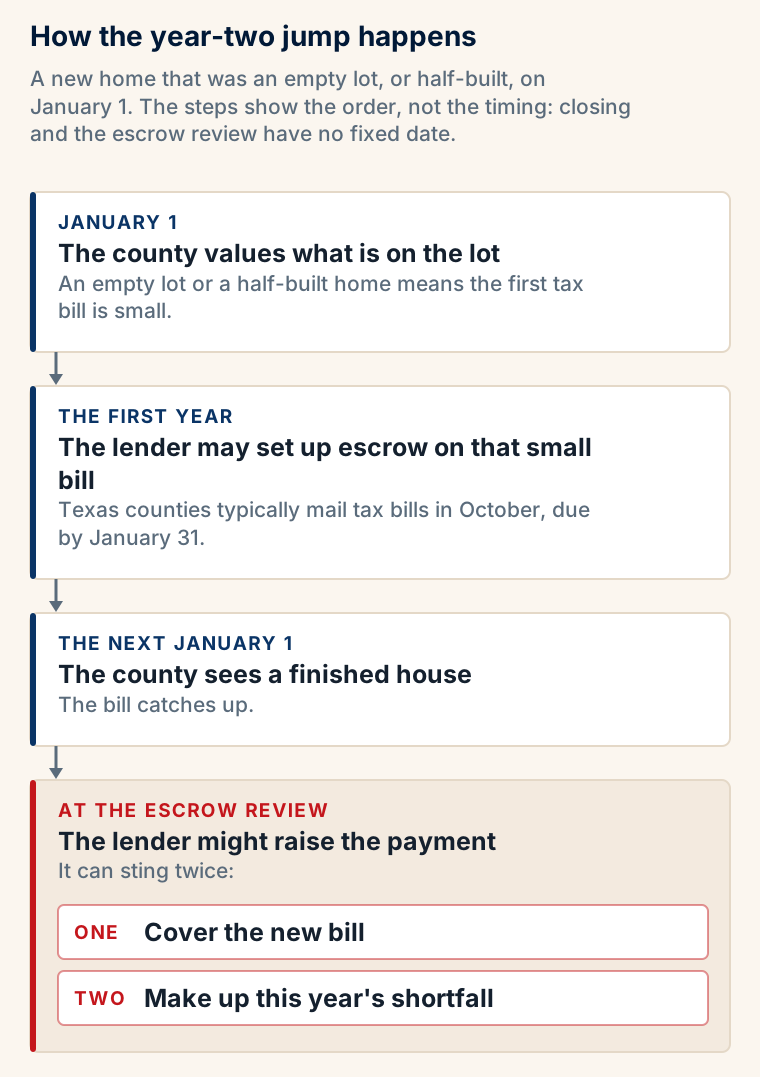
Each Texas county's appraisal district values every property as of January 1 each year. The property tax bill is based on whatever was on the lot that day.
If a new home was still an empty lot, or half-built, on January 1, the first tax bill is small. The lender may set up escrow (the part of the payment that covers taxes) based on that small bill. The next January 1, the county sees a finished house, and the bill catches up.
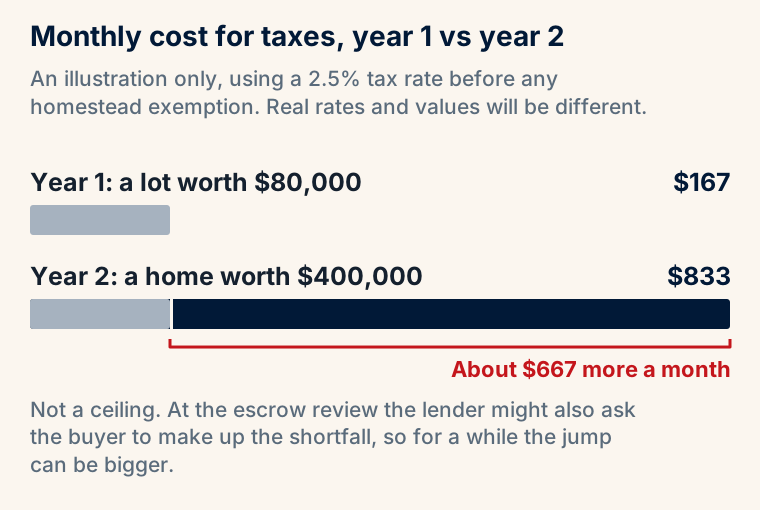
An illustration only, using a 2.5% tax rate before any homestead exemption. Real rates and values will be different.
| Year | Taxed as | Monthly cost for taxes |
|---|---|---|
| Year 1 | A lot worth $80,000 | $167 |
| Year 2 | A home worth $400,000 | $833 |
Why can it sting twice?
The lender collected enough for the small bill, not the big one. At the escrow review, the lender might raise the payment to cover the new bill and also ask the buyer to make up this year's shortfall. For a while, the jump can be bigger than the numbers above.
Does this only happen with new builds?
No. A seller's homestead exemption or senior tax freeze does not pass to the buyer when the house changes hands. The tax history on a listing might not be the bill the new owner gets.
How can a buyer spot it before signing?
Three steps can help spot it before signing.
- Ask the lender one question. "Are you estimating my taxes on the finished home, or on what's on the tax roll today?" If the answer is the tax roll, ask them to run it on the full value.
- Budget for the year-two payment, not the year-one payment. If year one comes in lower, put the difference into savings each month. When the escrow letter arrives, the money is already there.
- File the homestead exemption. It does not happen automatically. The county appraisal district's website explains when and how to file, and it can take a real bite out of the bill.
And the honest part
The figures above are an illustration, not a forecast. Tax rates, values, exemptions, escrow rules and payments vary by property, county and lender, and they change over time. Texas counties typically mail tax bills in October, due by January 31, so a new owner may not see the real number until well into the first year. Verify the figures for any specific property with the lender and a qualified tax professional before relying on them.
Buying in Texas?
Property taxes are one cost that catches buyers off guard. Help with the upfront costs is the one many buyers never hear about: there are 60-plus Texas homebuyer programs, and the two-minute quiz narrows the list to the ones worth asking about for someone in this position.